The Defence White Paper and its accompanying Integrated Investment Program foreshadows significant new investments in Army Aviation, ranging from the early retirement and replacement of the Tiger Armed Reconnaissance Helicopter (ARH) to the acquisition of a new armed light helicopter for Special Forces support and additional Chinook heavy-lift helicopters. The early retirement of the Tiger

Embraer says its new E2 family of jets is on track to make its maiden flight in the second half of 2016 after the first E190-E2 rolled out of the company’s Sao Jose dos Campos facility in Brazil overnight (Australian time). The rollout ceremony was attended by thousands of invited guests, media, suppliers and company

Airbus plans to increase production of its A330 family of aircraft to seven a month from the start of 2017, reflecting ongoing demand for the twin-engine widebody. The move to ramp up production was announced on February 24 (European time) when Airbus Group presented its calendar 2015 financial results. It represents a change of course
Airservices says contracts for further software design work on the new Onesky air traffic control system have been signed with Thales Australia. The contract is the latest step in the development of the new air traffic management system, which aims to combine Australia’s separate civil and military air traffic management systems into one program. Parts

The long-awaited 2016 Defence White Paper has committed the Turnbull federal government to a “fully costed” Integrated Investment Program for Defence that will see $195 billion spent over the next 10 years on defence capabilities including additional P-8 maritime surveillance aircraft and new armed and ship-based unmanned aircraft. Headlining the capability acquisitions is the government’s
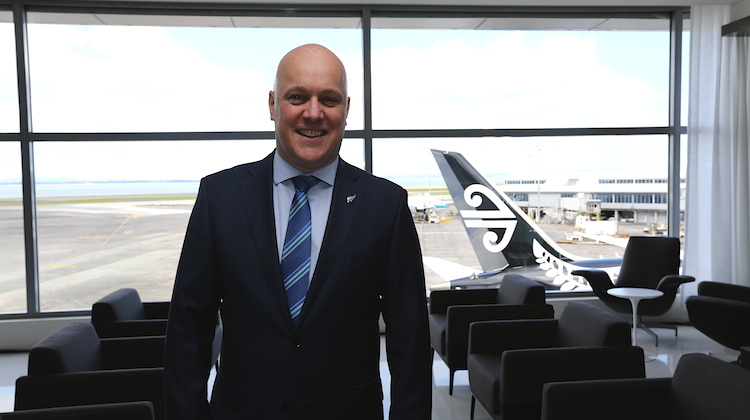
Air New Zealand chief executive Christopher Luxon says the airline’s recent capacity growth is being absorbed by a booming tourism market. The Star Alliance member commenced two new long routes to Buenos Aires and Houston in December as part of a 24 per cent increase in available seat kilometres (ASK) on its international network in